Transitive vs intransitive Japanese verbs: an intermediate learner's guide
You learned 「ドアを開ける」 in your first year. The verb takes を, the door is the object, you are the one opening it. Then you start reading a novel, and a sentence comes at you that looks almost identical but isn't:
「ドアが開いた。」
Same kanji. Almost the same verb. Different particle. No one in the sentence is doing the opening. The door, apparently, opened.
This is the transitive vs intransitive layer of Japanese, and it is the layer most textbooks introduce around N4 and then leave to immersion to consolidate. Once you start reading real Japanese, you meet these pairs constantly. The good news: there is a pattern. The honest news: the pattern doesn't cover every pair, and the intuition for which verb a native speaker reaches for is built by encountering them in real sentences, not by memorizing a list.
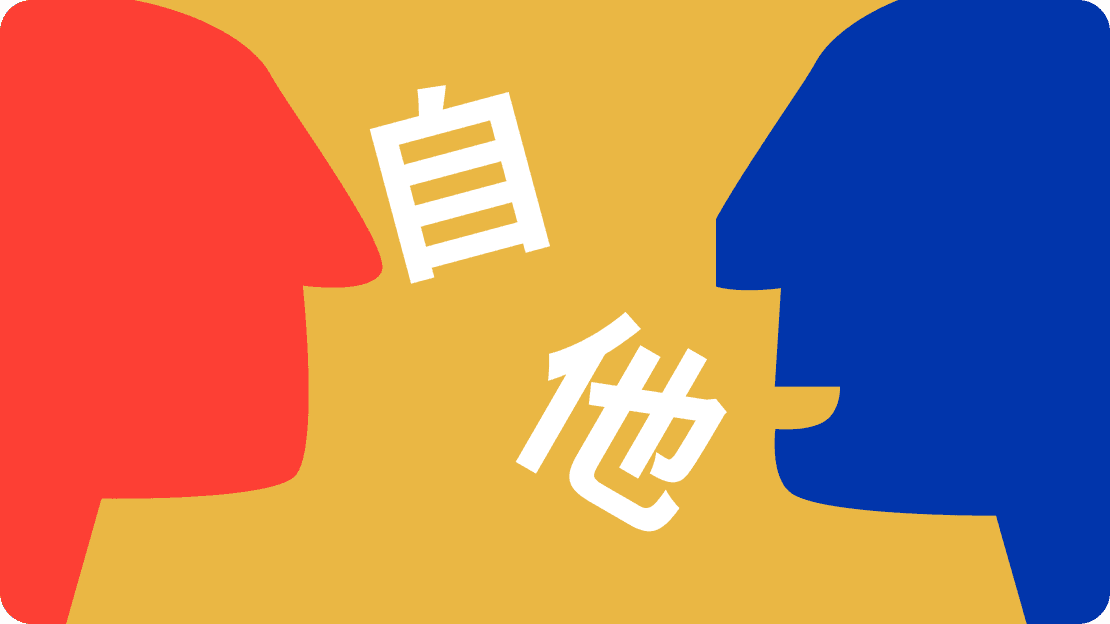
This guide is for intermediate learners who have already met 自動詞 and 他動詞 in a textbook and want the next layer of understanding.
Japanese transitive verbs (他動詞 / tadoushi) take a direct object marked with the particle を. Japanese intransitive verbs (自動詞 / jidoushi) describe a change of state with no direct object, with the subject marked by が. The same root often appears in both flavors as a paired set of verbs, like 開ける (transitive, to open something) and 開く (intransitive, to open by itself).
English has transitive and intransitive verbs too, but English usually lets the same verb do both jobs. You can say I broke the cup and the cup broke with the same verb break. Japanese splits these into two separate verbs: 壊す (to break something) and 壊れる (to break, by itself). The pair is a fixed lexical unit. You learn them together because in your head they need to live as a pair, not as one verb with a switch.
Some English-language guides (notably Tofugu) translate 自動詞 as "self-move verbs" and 他動詞 as "other-move verbs," which is a useful pedagogical handle. This guide stays with the standard "transitive / intransitive" pair throughout for consistency with dictionaries and JLPT materials.
Modern Japanese has several hundred transitive and intransitive verb pairs. The two verbs share a root, differ in their endings, and divide the work of describing an action into two cleanly separated halves: the agent half (someone does something) and the change-of-state half (something happens).
English speakers reading this often want to ask: why doesn't Japanese just use one verb like English does? The answer is the inverse of the question. Japanese encodes the distinction at the verb level. English encodes it at the sentence level, by adding a subject or not, and lets context disambiguate. Neither approach is more efficient. They are different choices about where the information lives.
As a native speaker, I do not feel the pair as one verb with a switch. 開ける and 開く feel like two separate words that happen to be related, the way an English speaker feels about lie and lay. You learn the pair together. You don't derive one from the other on the fly.
Tofugu's pillar on transitive and intransitive verbs covers the historical and morphological side in real depth, and if you want the full linguistic picture, that is the reference to go to. This guide stays on the intermediate-learner intuition side, because that is the part most immersion learners need help with.
When you encounter a verb in real Japanese and aren't sure whether it's transitive or intransitive, the particle is your first clue.
Look at the same root in two sentences:
「電気を消した。」 I turned off the light. (消す, transitive, を marks the direct object.)
「電気が消えた。」 The light went out. (消える, intransitive, が marks the subject of a change of state.)
The を sentence has an actor doing something to something. The が sentence has a thing changing state, with no implied actor. Once your eye learns to land on the particle first, the pair structure of Japanese verbs becomes much faster to read.
A caveat: in casual conversation, particles get dropped, and the rule loses some of its grip. 「電気消した?」 is normal spoken Japanese. The transitive vs intransitive distinction is still there in the choice of verb (消した is the transitive past), but you can't lean on the particle as hard. The rule is most reliable in writing, news, and subtitles. In dialogue, the verb itself carries the load.
There are useful ending patterns in Japanese transitivity pairs. None of them are perfect rules. Two of the most reliable:
The -す / -る pattern. The transitive verb ends in -す, the intransitive ends in -る:
消す (to turn off) / 消える (to go out)
出す (to take out) / 出る (to come out)
壊す (to break) / 壊れる (to break by itself)
渡す (to hand over) / 渡る (to cross)
The -える / -ある pattern. The transitive ends in -える, the intransitive ends in -ある:
始める (to begin something) / 始まる (to begin)
集める (to gather things) / 集まる (to gather)
閉める (to close something) / 閉まる (to close)
止める (to stop something) / 止まる (to stop)
These two patterns cover a meaningful slice of the verb pairs you'll meet in immersion reading. They are worth recognizing.
The honest hedge: there are other patterns (-う / -える, where 開く is intransitive and 開ける is transitive, sits in this family), and a non-trivial number of pairs that don't fit any pattern cleanly. As a native speaker, I didn't learn these as patterns. I learned them as paired words that go together, the way an English speaker learns lie / lay or rise / raise. The pattern is a useful scaffold for intermediate readers, but the long-term move is to absorb the pair as a unit.
Some Japanese terms translate 自動詞 as the “self verb” and 他動詞 as the “other verb.” This can be a useful handle for most learners: in the first sentence, the noun changes state by itself; in the second sentence, a person acts on the noun. Many Japanese verbs are split into self/other versions. English verbs often hide this because English ones reuse the same basic meaning in both roles.
In addition to the -す/-る and -える/-ある patterns, you’ll see intransitive/transitive pairs with different endings and suffixes.
In the -う/-える pattern, the intransitive version tends to be shorter, and the transitive tends to add -える. One good example pair is 開く / 開ける.
There is also a -める family that shows up in pairs like 始める / 始まる. The important concept is that pattern recognition helps, but it doesn’t tell you which new verbs to invent. You still need to read real sentences.
The passive form implies an act: an outside person did something, even if the sentence doesn’t name them. 「電気が消えられた」 would mean someone made the lights turned off in a passive construction. In an intransitive sentence like 「電気が消えた」, the lights turned off with no actor at all.Both sentences have ドアが at the front. Both describe the door ending up in an open state. The verbs look related. Most intermediate learners read them as variations of the same idea, with one being the passive of the other.
They are not the same. 開いた is the past tense of the intransitive verb 開く. It describes a change of state with no implied agent. The door opened, somehow, and the sentence does not commit to who or what caused it. 開けられた is the past tense of the passive of the transitive verb 開ける. It does commit. Someone opened the door. The agent might be unstated, but the grammar marks them as present.
This is one of the layers where 自動詞 and the passive both translate into the same English construction, so English-speaking learners conflate them. A native speaker hears the difference immediately: 開いた is neutral about agency, 開けられた is not. This intuition is built almost entirely through reading. You meet the contrast in real sentences enough times that the difference stops needing conscious decoding.
Not every Japanese verb has a transitive/intransitive partner. Some verbs live on one side of the divide only.
Transitive-only examples: 見る (to see), 食べる (to eat), 飲む (to drink), 読む (to read). These take a direct object marked with を, and they don't have a paired intransitive partner.
Intransitive-only examples: 行く (to go), 来る (to come), 寝る (to sleep), 死ぬ (to die). These take a subject marked with が (or は in topic-marked sentences), and they don't have a paired transitive partner.
When you meet one of these in reading, the particle rule still works. を means transitive, が means intransitive, and the verb's behavior matches. You don't need to hunt for a partner that doesn't exist.
The intuition for 自動詞 and 他動詞 doesn’t come from memorizing a flashcard deck of several hundred pairs. It comes from meeting the pairs in real sentences, in real reading, often enough that the particle stops needing conscious decoding and the partner verb starts feeling automatic. In Japanese/English (J-E) comparisons this is one of the big differences: Japanese verbs are less forgiving about “who did what.”
This is the loop immit is built for. You read with the popup dictionary on, hover a verb, save it with one click (the sentence comes with it), and review it later with the built-in FSRS.
What is the difference between transitive and intransitive verbs in Japanese?
Japanese transitive verbs (他動詞 / tadoushi) take a direct object marked with the particle を, and intransitive verbs (自動詞 / jidoushi) describe a change of state with no direct object, with the subject marked by が. The same root often appears as a paired set, like 開ける (transitive, to open something) and 開く (intransitive, to open by itself). The particle in the sentence is the fastest way to tell them apart.
Extra: terminology, in one place
Some Japanese terms translate 自動詞 as the “self verb” and 他動詞 as the “other verb.” This can be a useful handle for most learners: in the first sentence, the noun changes state by itself; in the second sentence, a person acts on the noun. Many Japanese verbs are split into self/other versions. English verbs often hide this because English ones reuse the same basic meaning in both roles.
Is there a pattern that tells me which verb in a pair is transitive?
There are useful patterns, but none of them are perfect rules. The two most reliable: in the -す / -る pattern, the transitive verb ends in -す and the intransitive ends in -る (消す / 消える). In the -える / -ある pattern, the transitive ends in -える and the intransitive ends in -ある (始める / 始まる).
Extra: patterns to recognize (not rules)
In addition to the -す/-る and -える/-ある patterns, you’ll see intransitive/transitive pairs with different endings and suffixes. In the -う/-える pattern, the intransitive version tends to be shorter, and the transitive tends to add an -える suffix. There is also a -める family that shows up in pairs like 始める / 始まる. The important concept is that pattern recognition helps, but it doesn’t tell you which new verbs to invent. You still need to read real sentences.
How do I know when to use 開く vs 開ける in a real sentence?
Ask whether the sentence has an actor opening something or a thing changing state by itself. 「ドアを開ける」 has an actor, takes を, uses the transitive 開ける. 「ドアが開く」 has no actor, takes が, uses the intransitive 開く. In casual conversation, particles get dropped and you lean on the verb itself, but in writing and subtitles the particle is the reliable signal.
Is を always a sign of a transitive verb?
Usually, yes: を marks a direct object in a transitive sentence. But there is a rare case: a motion verb can use を to mark the path or area, as in 「道を歩く」. The road isn’t being acted on. So treat を as a clue, not a guarantee.
Do word order changes matter?
Not much for this topic. At first glance, word order is often similar in Japanese, especially when the same noun comes early. The particle does the important work. The big difference is whether the sentence describes an act by a person (transitive) or an intransitive sentence about something changing state.
Why is the passive form different from an intransitive verb?
The passive form implies an act: an outside person did something, even if the sentence doesn’t name them. 「電気が消えられた」 would mean someone made the lights turned off in a passive construction. In an intransitive sentence like 「電気が消えた」, the lights turned off with no actor at all. That “person/actor matters” distinction is what the grammar is marking, even when it explains nothing about who did it.
Are all Japanese verbs paired this way?
No. Some verbs are transitive only (見る, 食べる, 飲む, 読む), and some are intransitive only (行く, 来る, 寝る, 死ぬ). When a verb doesn’t have a partner, the particle rule still works: を for transitive, が for intransitive. You don’t need to hunt for a partner that doesn’t exist.
What’s the fastest way to build intuition for verb pairs without burning out on a huge Anki deck?
Read real Japanese, save the verbs you actually meet, and review them with SRS. immit supports hover lookup, one-click save, and built-in FSRS review.