Subscribe to immit jobs
Hand-picked jobs in Japan that need your Japanese. Written up in English, with visa and language details included. For N2+ learners.
Anki alternative for Japanese: a calmer way to read and remember
You came to Japanese because you wanted to read it. Manga, light novels, news, the stuff your favorite creators post. Somewhere along the way you ended up maintaining an Anki setup instead: shared decks, AnkiConnect, a mining pipeline, a review pile that grows faster than you can clear it. If the tool has started to feel heavier than the language, you are not alone, and you are not doing it wrong.
This page is an honest look at Anki for Japanese, and where immit fits as an alternative. immit is a popup Japanese dictionary with a built-in spaced repetition flashcard system. You hover a word, look it up right there on the page, save it in one click with the sentence it came from, and immit schedules the review for you. No deck to download, no add ons to wire up, no account to create.
Try immit free — add the Chrome extension, no account needed.
what Anki does well
Let's give Anki its due, because it earns it. Anki is free, open source, and one of the most capable spaced repetition tools ever built. Its spaced repetition algorithm schedules reviews just before forgetting occurs, which is the whole point of spaced repetition: optimize the learning process so you study each word at the moment it is about to slip. With the right cards and steady study sessions, Anki helps retain over 10,000 Japanese words on the way to fluency, and plenty of advanced learners have done exactly that.
Anki suits an analytical learning style: you control every card, every interval, and every add on. For learners who enjoy that, it is hard to beat.
the Japanese Anki decks ecosystem
The deck library is genuinely deep, and it is a real reason people choose Anki. The Kaishi 1.5k deck covers 1,500 common Japanese words and has become the default starting deck for many learners. The Japanese Core 2000 deck teaches 2,000 common words ordered by frequency, so you spend your study material on useful words first.
For a kanji deck, the options lean on mnemonics, because kanji learning often requires effective mnemonic techniques for retention. The All-in-One Kanji Deck includes over 10,000 flashcards. KanjiDamage uses crude, memorable mnemonics to aid in kanji memorization, and the Recognition RTK deck teaches kanji through visual mnemonics and stroke order diagrams. If a specific prebuilt deck is what you want, Anki has the best deck for almost any goal.
That depth is the upside. The setup and upkeep behind it is the catch.
why people look for the best Anki alternatives
The friction is real, and naming it is not Anki-bashing. It is the reason this page exists.
Setting up a Japanese mining workflow in Anki means installing Yomitan, configuring AnkiConnect, choosing a note type, and tuning card templates so each card adds audio and example sentences. Even with good guides, that is thirty minutes minimum before you review your first word, and months of hand-tuning after. The interface is powerful but dated, and for many users the sheer number of options can feel overwhelming. Studying flashcards becomes a project in itself.
Then there is the review pile, and for most people that is the only problem that actually ends the habit. Spaced repetition is supposed to schedule reviews at optimal intervals, and it does. But when you mine aggressively from real Japanese media, the new cards stack up, and a few weeks of heavy reading practice can leave you staring at three or four hundred due cards. The plateau pattern is common: a learner climbs to two or three thousand words, the daily load gets heavy, they switch tools to escape the pile, the pile follows them, and the motivation that started everything quietly dies.
immit is built for the learner on the far side of that pattern. The pitch is not a better algorithm. It is less overhead.
immit as an Anki alternative for japanese
immit collapses the whole chain into one tool. Lookup, save, and review happen in the same place, so there is no gap between finding a word and remembering it.
Here is the loop. You are reading Japanese on any website. You hover a word and the popup appears: the headword with its reading in furigana, part of speech, an English meaning and translation, an example sentence for context, and a speaker icon to hear it pronounced. immit's built-in dictionary is production-grade out of the box, and built-in dictionaries enhance immersive language learning because you never break your reading to go look something up elsewhere. There is no custom dictionary to import. One click on the bookmark icon saves the word to your personal deck. immit's built-in FSRS takes it from there, scheduling each card with no deck config and no AnkiConnect.
Reviews come in two modes. Flip mode shows the word and you answer with a simple two-button check: knew it, or not yet. Type mode asks you to type the answer and immit checks it for recall. There is no card limit, and you choose how long each session runs (5, 15, or 30 minutes, or everything due), so you study on your own terms.
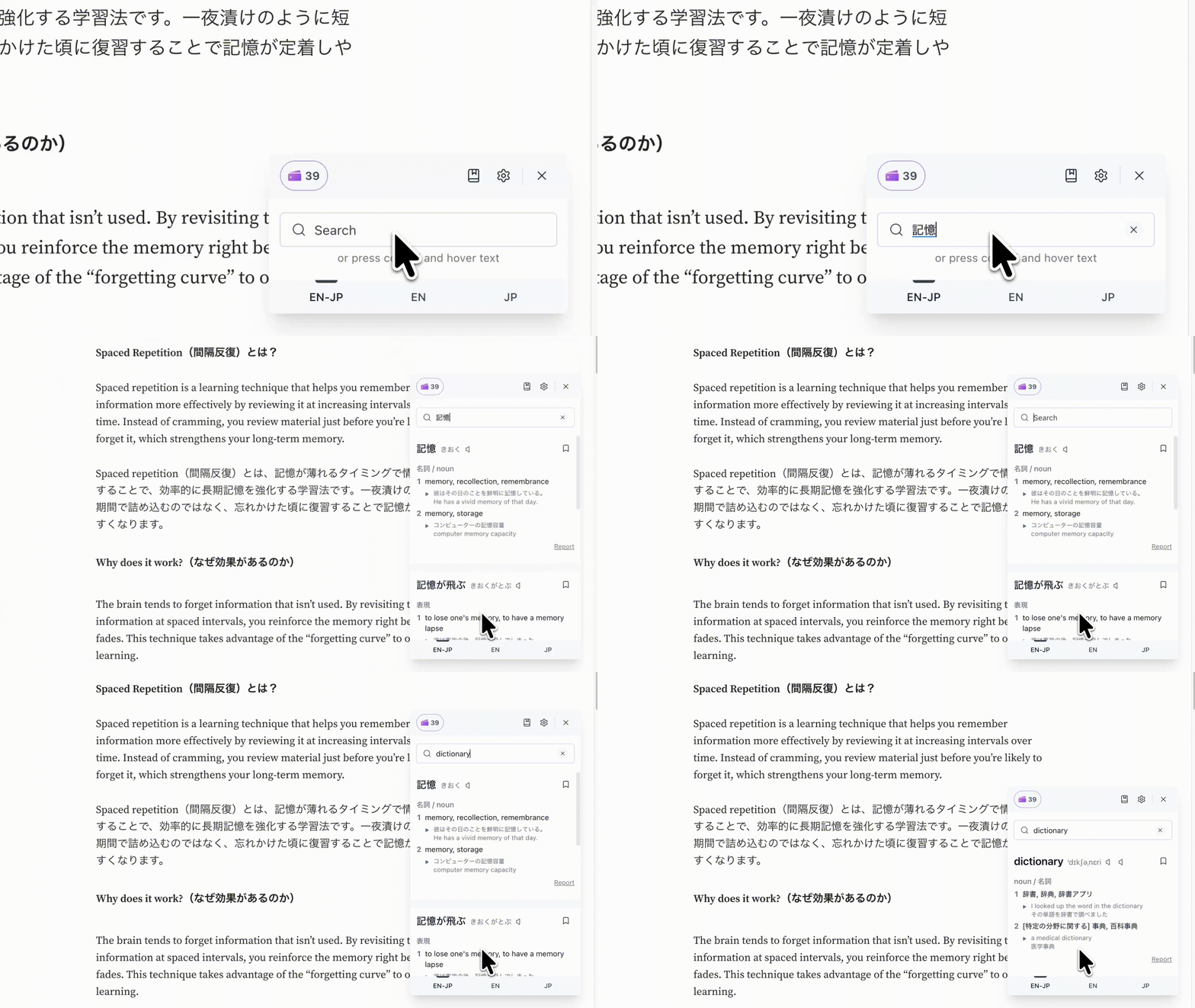 There is one more surface that no popup-only tool offers: the Pocket Dictionary. It is a small dictionary window you can pin to the corner of the page and keep open while you read. You can search a word in it without leaving the page, and you can clear a few flashcards right there in the window when you want a break from reading. It is a dictionary you read alongside, not one that interrupts you.
immit works fully offline. Lookup, save, and review all run on-device, so a flight or a café with no Wi-Fi is fine. There are no ads, and your lookups stay on your device. Lookup, SRS, and offline use are free with no account required, and multi-device sync is free too with an optional account.
Try immit free — lookup and SRS, no setup, no account.
immit vs Anki: side by side
| immit | Anki | |
|---|---|---|
| Price | Free | Free (AnkiMobile iOS $24.99 one-time) |
| Setup time | Install, one dictionary download, done | 30+ minutes for a Japanese mining workflow |
| Popup dictionary | Built in, works on any website | None (needs Yomitan or similar) |
| Dictionary import | Not needed, built in | Not applicable |
| Spaced repetition | Built-in FSRS | Spaced repetition algorithm (FSRS available) |
| Card creation | One-click save while reading | Manual, or via Yomitan + AnkiConnect |
| Add audio to cards | Automatic in popup | Manual or via add ons |
| Pocket Dictionary (pinned, searchable) | Yes | No |
| Offline | Lookup, save, and review offline | Yes |
| Prebuilt Japanese decks | No, you save words you actually meet | Large library (Kaishi 1.5k, Core 2000, RTK) |
The honest summary: Anki gives you a large library of decks and total control, at the cost of setup and maintenance. immit gives you a popup dictionary and SRS in one tool with almost no setup, at the cost of that deep configurability. They are aimed at different learners.
who each tool is for
Anki is the right call if you love the configuration as part of the hobby, want a specific prebuilt deck like the Japanese Core 2000 or a kanji deck built on stroke order and mnemonics, and you do not mind the maintenance. It is still the most powerful spaced repetition flashcards engine available, and that is not changing.
immit is the right call if you want to read Japanese and remember what you read, without the tooling becoming a second hobby. It fits intermediate to advanced Japanese learners who are well past learning hiragana and katakana, who read real Japanese media and anime subtitles on the web, and who want vocabulary retention to happen in the same place they read.
Where immit sits next to your other tools
immit is not a structured course, and it does not pretend to be. A few tools own parts of the journey that immit deliberately leaves alone, and the honest move is to point you to them:
-
Grammar: Bunpro is dedicated exclusively to Japanese grammar, with SRS for grammar points. When you hit new grammar in your reading, that is where to drill it. Tae Kim's Grammar Guide is the free reference many learners start from.
-
Kanji curriculum: WaniKani focuses strictly on kanji and vocabulary through a structured mnemonic path, if you want kanji taught in a fixed order rather than met in the wild.
-
All-in-one beginner platform: Renshuu is a free, all-in-one Japanese platform with quizzes, decks, and grammar, strong for learners who want one place to start.
immit handles the reading-and-retention loop: the part where you meet useful words in real Japanese and keep them. That is the part Anki has owned by default until now, and it is the part immit is built to make lighter.
Try immit free — start with the words you meet today.
frequently asked questions
What is the best Anki alternative for Japanese? For most intermediate to advanced learners reading native material, immit is the most direct Anki alternative for Japanese, because it combines a popup dictionary and a built-in spaced repetition system in one tool with no setup. Anki remains the better fit if you specifically want prebuilt decks and deep configurability. The right choice depends on whether you want control or you want less overhead.
Is immit free like Anki? Yes. immit is free: lookup, spaced repetition review, and offline use with no account required, and syncing across devices is free too with an optional account. There is no paid plan. Anki is free on desktop and Android; AnkiMobile on iOS is a $24.99 one-time purchase.
Do I need AnkiConnect or any setup to use immit? No. immit does not use Anki, Yomitan, or AnkiConnect. The dictionary and the SRS are built in, so you install the Chrome extension and start looking up and saving words right away.
Can immit replace my Anki mining workflow? For reading on the web, yes. immit's one-click save turns the Yomitan-plus-AnkiConnect chain into a single action: hover, save, review. If you have years of existing Anki cards, you can keep using them in Anki while you read new material in immit.
Does immit use the same spaced repetition as Anki? immit uses FSRS, built in, the same modern spaced repetition algorithm that Anki offers as an option, and the same core principle: review a word right before you would forget it. The two implementations differ in places, but the idea is the same.
How long does it take to learn hiragana and katakana before tools like these help? Learning hiragana and katakana takes about two weeks with steady practice. immit and Anki are most useful after that, once you are reading real Japanese and building vocabulary rather than learning the kana themselves.
Will immit work offline? Yes. The dictionary data lives on your device, so lookup, saving, and review all work without a connection. If you create a free account, your saved words sync across devices once you reconnect.